Mobility Aid Spare Parts: What a Distributor Should Contract
A 12-month warranty decides who pays for a failure. The parts clause decides whether that failure becomes a repair or a write-off.
What this note covers
A 12-month warranty decides who pays for a failure. The parts clause decides whether that failure becomes a repair or a write-off.
Covers: mobility aid spare parts supplier · rehab equipment warranty terms · assistive device replacement parts · shower chair spare parts wholesale · commode chair replacement parts · mobility aids after-sales program
Key figures at a glance
A mobility aid spare parts programme is the cheapest thing a distributor can buy and the last thing most of them ask for. Buyers compare the 12-month warranty line, negotiate the unit price, and sign — then discover eighteen months later that a returned shower chair with one split foot pad has no path back into service. The chair is intact. The frame is fine. The part that costs almost nothing is the reason a full unit gets written off.
This is not a quality argument. It is an arithmetic argument about where the money sits after the sale, and it is decided by one paragraph in a supplier’s terms that most buyers never read closely enough to negotiate.
Which parts fail first: the floor end and the moving joint
Across every category on this site — commode chairs, shower chairs, toilet rails, canes, crutches, walkers — the parts that wear are the ones in contact with the floor and the ones with a moving joint. Nothing else on an assistive device has a shorter service life than those two groups.
On the floor end it is the foot pad. A wide shower chair such as the YMX5109-S uses thickened TPR foot pads; the folding LM5206K and YMX5208-S use TPR foot mats; the wood-grain LM3200 uses sloped rubber pads. A carbon fibre cane such as the LM4904 ships with TPR tyre-grade rubber tips and three interchangeable bases — single foot pad, small quad base, large quad base — which is worth noting because it means the floor-contact part on that model is designed to be changed by the user, without tools and without a technician.
Wet rooms and chlorine-based cleaning shorten the life of any rubber or TPR part. That is not a defect; it is the environment the product is sold into. A distributor in a market with a high share of institutional customers will replace feet faster than a distributor selling only into private homes, and the parts programme should reflect that rather than pretend both are the same.
On the moving joint it is the height-adjustment mechanism — spring pins, locking collars, the lock buckle on a folding chair — and the seat pad. Every one of those is a part, not a sub-assembly, which is exactly the point: they can be shipped in a bag.
What a 12-month warranty should say, line by line
A 12-month warranty against manufacturing defects is the standard term, and on its own it tells you almost nothing. Read it for four things.
What is covered. Manufacturing defects: a weld that fails, a tube that cracks at a bend, a height pin that will not lock, a moulding that arrives with a short shot. This is what a medical device quality system is for, and it is the reason a supplier audited to ISO 13485 8623138319 rather than only ISO 9001 8629985173 is easier to hold to a claim — the process documentation exists before the dispute does.
What is not covered. Wear items consumed in normal use, freight damage caused by handling after the carton left the factory, and a unit used outside its rated load. A 150 kg chair used at 200 kg is not a warranty event, and no amount of negotiating changes that.
How the remedy works. Replacement, repair, or refund — and in which order. Our terms state a faulty unit is replaced rather than returned, and the reason is purely economic: return freight on a chair frame from Europe or North America back to South China usually exceeds the value of the failed part by a wide margin. Any supplier whose warranty process starts with “send it back” has not costed their own clause.
Who pays freight. This is the line that decides the real value of the term. A replacement part that ships at the buyer’s expense is a discount, not a warranty. Ask for the split in writing, along with the evidence standard: photographs of the fault, the batch or carton label, and whether a signed statement from the end user is required.
Sizing a parts kit from the models you actually stock
Do not size a kit as a percentage of the order. Size it from the parts that physically exist per unit, then cut the list to what a customer cannot buy locally.
A wide shower chair carries four foot pads, one seat board, one backrest pad and two armrest pads. A commode chair carries four feet, a seat pad and a bucket — and on the YMX6108K the second bucket ships with the unit as standard, which halves the most common institutional complaint before it happens. A toilet safety rail such as the YMX1106-S carries four feet, two armrest pads and the clamp hardware. A cane carries one tip, or three if it is the interchangeable-base version.
Multiply by the population you expect in service over the warranty term, then keep the small, high-failure, low-value items and drop the ones a local hardware supplier can match. The test is simple: if a customer can buy it in their own town within a day, do not stock it. If it is a moulded part in a colour match that only the factory makes, stock it.
Two practical rules. First, label the bin by part number and model, not by the product’s marketing name — a warehouse that files parts under “shower chair” loses an hour per claim. Second, hold the parts for models you actually sold in the last 24 months as a priority, and the rest as a documented reorder rather than shelf stock.
Where the parts programme meets the container
Parts take cube, and cube is the constraint that decides whether a kit is free or expensive. A 40HQ holds roughly 76 m³ and a 20GP roughly 33 m³ of payload space, which means a carton of foot pads is competing with cartons of chairs for the same volume.
The efficient structure is to attach parts to a chair order rather than ship them separately. A parts bag inside the master carton, or a small parts carton consolidated onto the same pallet, adds a marginal amount of volume and no new freight booking. Shipped alone, the same bag pays a minimum charge and a booking fee that can exceed its value.
Timing matters as much as volume. Stock models dispatch in 3–5 working days; production runs dispatch 7–10 days after deposit. That difference is why a distributor with a service obligation keeps a parts bin rather than relying on air freight from the factory every time something fails — and why the $2,000 minimum is stated on order value, not on pieces per model, so a parts top-up can ride along with a chair replenishment in the same order.
Five clauses to get in writing before the first PO
- A parts list per model, with part numbers. Not a picture of the exploded view — a table you can order from.
- The availability term. Ours reads “for the life of the model”: feet, tips, caps, armrests, seats and hardware for as long as that model is sold, not for a fixed number of years counted from your last container.
- The warranty remedy and the freight split, as described above, including the evidence standard for a claim.
- Which parts are user-serviceable. The interchangeable bases on the LM4904 are a selling point only if your customer service team knows they exist.
- Who owns the artwork on a private-label carton and what happens to the parts packaging if you change logo — a small clause that becomes relevant the day a buyer rebrands.
How to price a return against a part
The judgement framework is short enough to run on a single failure. Ask what the customer receives, what it costs to get it to them, and what the unit cost you landed. A failed foot pad resolved by a part in the post is a five-minute conversation. The same failure resolved by a replacement chair is a freight booking, a customs entry and a written-off frame — three costs where there should have been one.
That is the whole case for a parts programme, and it does not depend on the failure rate being high. It depends only on the failure being predictable, which for floor-contact parts and height mechanisms it always is. A distributor who signs a warranty term without a parts clause has bought a promise; the one who signs both has bought a service life.
If you are building the first order for a category, the model pages are the place to start — shower chairs, commode chairs, canes and walkers each list the parts that exist on the unit, and the ordering terms that apply to every model are set out on MOQ and pricing. The certificates a tender or a warranty claim will ask for are on certifications. And if you are still deciding which configurations to stock in the first place, the design details that drive returns are covered in this piece on return rates.
Frequently asked questions
- What spare parts should I keep for shower chairs and commode chairs?
- The floor-contact parts and the moving joint are what wear: TPR or rubber foot pads, cane tips, height-adjustment spring pins and lock buckles, EVA or HDPE seat pads, armrest pads, and the hardware bag. On a folding shower chair the lock buckle and hinge are the two parts to hold; on a commode chair it is the seat pad, the bucket and the four feet. Ask for a parts list with a part number per model so a reorder does not depend on someone remembering what the chair looked like.
- What does a 12-month warranty on mobility aids actually cover?
- It covers manufacturing defects — a weld that fails, a tube that cracks at a bend, a height pin that does not lock, a moulding that arrives with a short shot. It does not cover wear items consumed in normal use, freight damage caused by handling, or a unit used outside its rated load. The useful question is not the length of the term but who pays freight when a replacement goes out, and whether the faulty unit must come back at all.
- Who pays the freight when a warranty unit is replaced?
- Get this written down, because it is where the 12 months either saves you money or costs you money. Sending a complete chair back to China is almost never worth it; replacing the failed part or the failed unit and scrapping the original locally is the cheaper path for both sides. What you need in the agreement is the split: who books, who pays, and what proof of the fault is required before a replacement leaves the factory.
- How many spare parts should I order with my first container?
- Size the kit from the parts that exist per unit rather than from a guessed percentage. A wide shower chair like the YMX5109-S carries four foot pads, one seat board and two armrest pads; multiply by the number of chairs you expect in the field over the warranty term, then cut the list to what a customer cannot easily buy locally. Parts are small and light compared with a frame, so they ride inside the same carton and add almost nothing to the freight line.
What to fix before you request a quote
The warranty term is a number you compare. The parts clause is a programme you either have or do not — and it is the one that decides whether a failed unit becomes a five-dollar part or a written-off chair.
How to apply this to your order
- Ask for a parts list with a part number for every model you buy, before the first PO, not after the first failure.
- Write the freight split into the warranty clause: who books the replacement, who pays, and what evidence of the fault is accepted.
- Put a parts kit on the first order as its own line item, sized from the wear parts per unit and the number of chairs you expect in service.
- Keep one parts bin per model family in the warehouse, labelled by part number, so a field failure is a same-day fix.
Models this note applies to
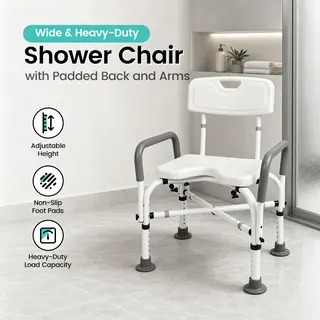
YMX5109-S
Wide heavy-duty shower chair with padded back and arms, 5-level height adjustment and a 350 kg load rating
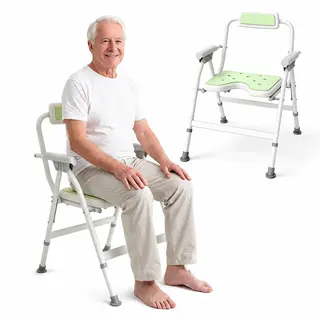
YMX5208-S
Folding bath chair with adjustable backrest, 5-level height adjustment and a 150 kg load rating
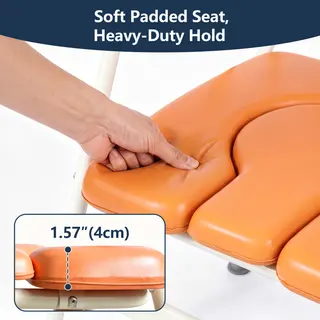
YMX6108K
Multi-angle reclining backrest, wide-stance frame, second bucket included
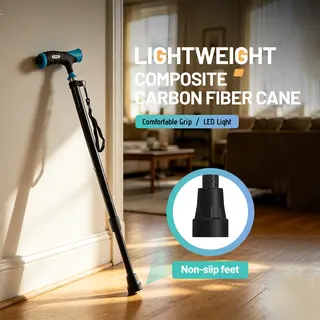
LM4904
Carbon fibre cane with a built-in LED light in the handle, dual-handle support and 10-level height adjustment
Related notes
Price this against your market
Send the category, the market and the quantity band. We reply with material options, MOQ per SKU, lead time and the certificates your market needs.